Best drone cases
A case is cheap insurance for a gimbal, until you buy far more case than the flying you actually do requires.
Researched from published specifications and verified owner reviews · updated 2026
The short answer
A cut-foam hard case like the YETEETH case for the Mini 4 Pro costs around $30, while a Pelican Air 1535 with no foam runs about $262 and is built for checked-baggage travel, not casual local flying.
For most Mini-class owners the Lykus PVC1 hard case with dividers is the better long-term buy over a single-aircraft case, because its divider system keeps working after you upgrade the aircraft or add a second one. If you know you will only ever own the one drone you have right now, the cheaper Hard case for Mini 3 and Mini 4 Pro with cut foam sized to it does the same protective job for a third of the price.

Lykus
Lykus PVC1 hard case with dividers
Divider system, Mavic, Air and Mini
A divider system rather than one-shape foam, so the case still fits your kit after you trade up to a different Mavic, Air or Mini model.
Prices move constantly. We earn a commission if you buy through these links, at no extra cost to you.
What is a drone case actually protecting against?
Three separate risks, and they call for different solutions. The first is a drop or a crush, which a rigid shell with cut foam or dividers absorbs by spreading the impact away from the gimbal, the most fragile and expensive single part on most camera drones. The second is dust and grit working into hinges, gimbal motors and battery contacts over months of being tossed loose into a backpack, which a soft bag or a hard case both solve equally well since the threat is exposure, not impact. The third, and the one people plan for least, is a checked flight: airline baggage handling routinely subjects cases to drops from cart height onto concrete, and only a genuinely rigid case with real foam or dividers reliably survives that.
How did we choose these cases?
We do not fly review units and we are not claiming otherwise. This roundup is built from manufacturer specifications for material, dimensions, foam type and any stated ingress rating, checked against verified owner reviews for the details a spec sheet leaves out, such as whether a zipper survives daily use, whether the foam actually holds its cut shape after repeated packing, and whether a case that claims to fit a Fly More combo actually has room for every battery in the box. Where owner reports were split, we said so rather than picking a side.
Cases by how you actually fly
The right case depends on how often you fly, whether you check bags, and whether you own more than one aircraft.

PGmoon
Carrying case for Mini 3 and Mini 4 Pro
Semi-rigid shoulder bag
Flying a Mini-class drone a few times a week and wanting something light and quick to open.
Lighter and faster to open than a hard case, which is what you want when the aircraft goes out three times a week.

YETEETH
Hard case for Mini 3 and Mini 4 Pro
Cut foam, holds aircraft, RC and packs
A dedicated hard case for one Mini-class aircraft, controller and packs at a low price.
Cut foam for the aircraft, controller and three packs. A soft sleeve does not stop a gimbal from taking a knock in a car boot.
Lykus
Lykus PVC1 hard case with dividers
Divider system, Mavic, Air and Mini
Owning more than one airframe, or expecting to trade up, without buying a new case each time.
Dividers rather than cut foam, so it survives changing aircraft. The right choice if you own two airframes or expect to upgrade.
Pelican
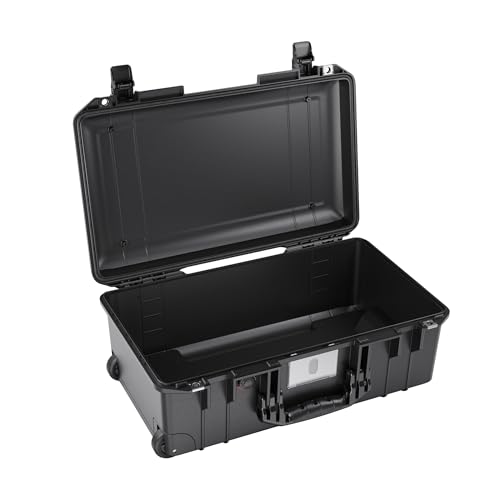
Pelican Air 1535 case (no foam)
Carry-on size, IP67, no foam
Flying commercially, checking gear on flights, or protecting a kit worth more than the case itself.
The case you buy once. Carry-on legal on most airlines, watertight, and it lets you cut or buy foam to fit whatever the kit becomes.
Prices are approximate and change constantly. Links are affiliate links: we earn a commission if you buy, at no extra cost to you.
The expert tier here, the Pelican Air 1535 case (no foam), is not the case for someone who flies a single Mini-class drone around the neighbourhood a couple of times a month. It costs more than several aircraft on this site, it ships with no foam so you have to cut or buy inserts yourself, and its main advantage, a genuine IP67 seal and carry-on-legal rigidity, only matters if you are checking the case as luggage or working in conditions wet and dusty enough to test a seal. For that flyer, the Carrying case for Mini 3 and Mini 4 Pro or Hard case for Mini 3 and Mini 4 Pro solves the real problem for a fraction of the cost.
Case comparison at a glance
| Case | Style | Interior | Best fit | Price |
|---|---|---|---|---|
| Carrying case for Mini 3 and Mini 4 Pro | Semi-rigid shoulder bag | Soft padded dividers | Mini 3 and Mini 4 Pro | $27 |
| Hard case for Mini 3 and Mini 4 Pro | Hard shell | Cut foam, aircraft and RC shaped | Mini 3 and Mini 4 Pro | $30 |
| Lykus PVC1 hard case with dividers | Hard shell | Adjustable divider system | Mavic, Air and Mini series | $100 |
| Pelican Air 1535 case (no foam) | Rigid travel case, IP67 | No foam, cut or buy your own | Any kit, checked-baggage travel | $262 |
Hard case versus soft bag: what actually matters
A hard shell wins on drop protection and stacking strength, which matters in a car trunk under other gear or in an overhead bin. A soft bag wins on speed and weight: it opens with one zip instead of two latches, it compresses flat when empty, and for a light Mini-class aircraft flown out of a backpack a few times a week, that speed adds up over a season more than the extra protection does. Neither is objectively correct. The honest question is how the case travels between flights, not how the aircraft flies once it is out of the case.
What actually needs to fit inside
Sizing a case around the aircraft alone is the most common mistake. A realistic kit for even a Mini-class drone includes the controller, two to three spare packs, a set of Low-noise propellers for Mini 3 and Mini 4 Pro (24 pack) spares, an Freewell All Day 6-pack ND filters (Mini 3 series) filter set, and a spare Lexar 256 GB microSDXC UHS-I card, and every one of those needs a defined spot or it rattles against the aircraft during transport. Before buying, lay out the actual kit you carry and check it against the case's stated interior dimensions rather than trusting a product photo that only shows the aircraft and controller.
Flying with the case: what airlines actually require
Most airlines follow the same general lithium battery rule regardless of which case the batteries travel in: spare lithium batteries must go in carry-on baggage, never in a checked bag, and each battery's rated capacity determines whether it is allowed at all. Packs rated up to 100 watt-hours are generally accepted without special permission, which covers the vast majority of drone packs including the DJI Air 3S Intelligent Flight Battery and DJI Mini 4 Pro Intelligent Flight Battery Plus. Packs between 100 and 160 watt-hours, which includes some larger enterprise and cinema-camera drone batteries, typically require prior airline approval and are limited in quantity per passenger. Anything rated above 160 watt-hours is generally prohibited from passenger aircraft entirely. None of this changes based on which case the batteries are packed in, and it is the traveler's responsibility to confirm the specific airline's current policy before a flight, since carriers do enforce this at the gate.
A hard case with individually padded battery slots, like the divider system in the Lykus PVC1 hard case with dividers or the cut foam in the Hard case for Mini 3 and Mini 4 Pro, is genuinely useful here for a different reason than airline compliance: it keeps battery terminals from contacting each other or loose metal tools during handling, which is good practice regardless of whether you are flying commercially or driving to a local park.
Foam versus dividers over a full year of use
Cut foam looks tidier on day one and it stays that way for a long time if the case lives indoors and travels gently, but repeated compression from the aircraft being pulled out and pressed back in hundreds of times over a year does eventually cause pre-cut foam to lose some of its snug recoil, especially around the tightest corners cut for a controller or battery. A divider system made from firmer padded panels resists that kind of long-term compression fatigue better simply because the walls are thicker and rigid rather than a thin foam skin, which is one more reason the Lykus PVC1 hard case with dividers tends to outlast a cut-foam case even when the aircraft inside never changes.
Labeling a case that travels or gets loaned out
A case that only ever sits in your own closet does not need labeling, but one that goes into a shared vehicle, a rental car on a work trip, or gets loaned to a colleague benefits from a name and phone number on the outside and, for the more expensive cases, a printed contents list taped inside the lid. This matters more than it sounds like it should for a case like the Pelican Air 1535 case (no foam), which looks identical to countless other Pelican-style cases at a busy airport baggage carousel, and a simple label is the cheapest insurance against someone else walking off with the wrong case by mistake.
Cleaning and drying a case before it goes back on the shelf
A case that comes home from a beach, a job site or a rainy shoot deserves a few minutes of attention before it is closed and stored. Grit and sand caught inside foam cutouts grinds into the material every time the lid closes, which shortens the life of cut foam faster than the flying itself does, so a quick shake and wipe-down before repacking is worth the time. A case that got wet should be left open to dry fully rather than sealed shut, since a closed hard case with damp foam inside is exactly the environment mildew needs, and a musty case is a much harder problem to fix than a few extra minutes of drying time would have prevented.
Buying tips
- Match the case to your kit, not just the aircraft. A case sized only for the airframe and controller with no room for spare packs, filters or a card wallet gets abandoned within a month in favour of a loose backpack.
- Cut foam is cheaper and tighter, dividers are more flexible. If you already know you are staying on the same aircraft for years, cut foam is the better value. If an upgrade is likely within a season or two, a divider system avoids buying a second case.
- Check the stated ingress rating rather than assuming. Only the Pelican Air 1535 case (no foam) on this list carries a genuine IP67 rating. A hard shell without a stated rating is impact resistant, not waterproof.
- Weigh the case empty before you buy. A Pelican-class travel case can weigh several kilograms before anything goes inside it, which eats directly into an airline carry-on or checked weight allowance.
- Store spare packs at storage voltage inside the case, not full charge. A case is not ventilated storage, and a stack of fully charged packs sealed inside a hard shell for weeks is worse practice than the same packs at storage charge. See our LiPo storage guide for the specifics.
What to pack alongside the case
A case protects what is inside it, but a full field kit is bigger than the case alone. A folding landing pad usually straps to the outside or fits a side pocket rather than the main foam cavity, and pilots who fly commercially or carry additional spare batteries should read our best drone batteries roundup for how many spares actually fit a case this size before it stops closing flat. Anyone treating a preflight routine as a checklist rather than a memory exercise should also see our preflight checklist, which starts with pulling the aircraft out of the case in a known, repeatable order.
Questions people ask
+ Do I really need a hard case for a drone, or is a soft bag enough?
A soft bag such as the PGmoon shoulder case is genuinely fine for a light Mini-class drone flown casually around town, where the main risk is scuffing and dust rather than a drop or a checked flight. A hard case earns its price once you fly commercially, travel by air with the gear, or the replacement cost of the aircraft is high enough that a cracked gimbal from a dropped bag would actually hurt.
+ Is a Pelican case overkill for a DJI Mini or Air series drone?
For casual flying, usually yes. A Pelican Air 1535 costs more than some of the aircraft it protects and adds real bulk and weight to carry. It earns its price when you check the case as luggage, work in wet or dusty commercial environments, or need a case that will still fit the next aircraft you buy since it ships with no foam so you cut or buy inserts to match whatever is inside.
+ What is the difference between cut foam and a divider system?
Cut foam is pre-shaped for one specific aircraft and its included accessories, which gives the tightest fit and the best price but stops working the moment you change aircraft. A divider system uses adjustable padded walls that you rearrange by hand, which fits a wider range of gear less precisely but keeps working after you upgrade, add a second airframe, or start carrying different accessories.
+ Can I fit spare batteries safely in a drone case?
Most hard cases have room for two to four spare packs alongside the aircraft, but a case is not a substitute for a fireproof LiPo bag if you are carrying LiPo chemistry rather than a sealed Intelligent Flight Battery. Pack batteries so they cannot short against metal tools or each other, and see our LiPo storage guide for the specific handling rules that apply on top of whatever case you use.
+ Are hard drone cases actually waterproof?
Only if the manufacturer states an IP rating, and most budget hard cases do not. The Pelican Air 1535 is rated IP67 and will survive a genuine submersion test, while cheaper hard-shell cases marketed as weatherproof are usually only splash resistant around a gasketed seam. Check the specific rating rather than assuming any hard-sided case is sealed.
+ Is it worth buying a case at the same time as the drone?
Yes, for one practical reason: a cut-foam case is sized to the exact aircraft, controller and battery dimensions of that model, and manufacturers occasionally revise those dimensions between hardware revisions. Buying the case while the current version is confirmed in stock avoids a mismatch that only shows up when the foam will not close over a slightly larger controller.