Best field charging power for drone pilots
A drone with no power to charge it is a paperweight. Here is what actually moves watts fast, at home and away from a wall.
Researched from published specifications and verified owner reviews · updated 2026
The short answer
A DJI 30W USB-C Two-Way Charging Hub (around $53) paired with a 100W PD wall charger (around $36) covers most home charging; for a full day away from an outlet, an Anker 737 power bank (around $110, 140W output) or a Jackery Explorer 300 power station (around $179, 293 Wh) keeps packs cycling through the same hub.
The gap between a drone's advertised charge time and the one you actually get almost always comes down to one thing: the wattage feeding the charger, not the charger itself. The DJI 30W USB-C Two-Way Charging Hub is the piece most pilots are missing, because it charges packs in sequence from a single cable and doubles as a power bank in reverse, but it only performs at its rated speed when the wall charger behind it can actually deliver 30 watts.

DJI
DJI 30W USB-C Two-Way Charging Hub
Sequential charging, acts as a power bank
Charges multiple packs in sequence from one cable and reverses to top up a phone from a spare pack, which changes how a field day feels more than almost any other accessory.
Prices move constantly. We earn a commission if you buy through these links, at no extra cost to you.
Why does a drone battery charge slower than the box says?
Manufacturers quote charge times assuming their recommended charger, and most drones ship with only a USB-C cable, no brick included, on the assumption you already own a compatible one. The problem is that a typical phone charger tops out around 18 to 20 W, while a sequential charging hub like the DJI 30W USB-C Two-Way Charging Hub is built to draw close to 30 W while actively cycling through packs. Plug that hub into an 18 W phone charger and it will still work, just noticeably slower than the number on the box, because the bottleneck moved from the hub to the wall.
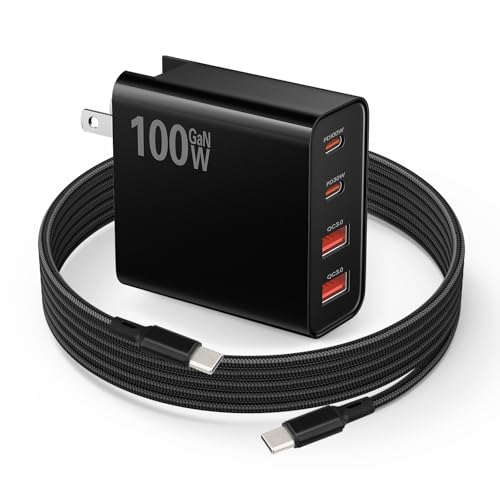
A 100W USB-C PD fast charger for DJI drones removes that bottleneck for a small outlay. At 100 W of USB-C PD output, it has enough headroom to run a hub at full speed with capacity left over for a phone or controller charging alongside it from a second port, which is the difference between a lunch-break top-up and an actual full recharge.
How much power bank capacity does a field day actually need?
Start from watt-hours, not milliamp-hours, because that is the unit both the pack and the bank are actually measured in once you convert. A mid-size prosumer drone pack, the kind that runs a 45 minute rated aircraft, holds somewhere around 45 to 60 Wh, and a full recharge from the field consumes roughly that amount from the bank plus a modest loss to charging inefficiency, typically around 10 to 15 percent.
The Anker 737 power bank (140W, 24,000 mAh) holds roughly 86 to 97 Wh depending on its internal cell chemistry and delivers up to 140 W, which in practice covers one and a half to two mid-size drone packs plus a controller and a phone before it needs its own recharge. That is enough for most single-session outings. It is not enough for a full day of continuous flying across six or eight packs, which is where a larger power station takes over.
When does a power bank stop being enough?
The Jackery Explorer 300 portable power station holds 293 Wh, roughly three times the Anker 737's capacity, and adds AC outlets so it can run a laptop for on-site footage offload alongside charging drone packs. That combination, AC power plus enough capacity to recharge a full battery set twice over, is what a multi-battery mapping or real estate day at a remote site actually needs. It is bulkier and heavier than a power bank, and it is the wrong choice if your entire kit is one drone and two spare packs living in a backpack.
| Unit | Capacity | Max output | Best for |
|---|---|---|---|
| DJI 30W USB-C Two-Way Charging Hub | n/a, passthrough hub | 30 W into the hub | Sequential charging at home, any power source |
| 100W USB-C PD fast charger for DJI drones | n/a, wall charger | 100 W PD, multi-port | Feeding the hub at its full rated speed |
| Anker 737 power bank (140W, 24,000 mAh) | 24,000 mAh, roughly 86 to 97 Wh | 140 W PD out | One session away from an outlet, 1 to 2 packs |
| Jackery Explorer 300 portable power station | 293 Wh | AC outlets plus USB | Full day, multiple packs, laptop offload |
Build your field power kit in order
Most pilots need the first two together before anything else. The last two only matter once you are flying away from a wall outlet for real.
DJI
DJI 30W USB-C Two-Way Charging Hub
Sequential charging, acts as a power bank
A recreational flyer with two or three packs who wants them charging in sequence off one cable.
Charges packs in sequence from one cable and reverses to charge a phone from a pack. The single accessory that most changes how a day in the field feels.
weishan
100W USB-C PD fast charger for DJI drones
100W PD, multi-port
Anyone whose drone shipped with a cable and no wall brick, which is most of them.
Most drones ship with a cable and no brick. A 100W PD charger is what makes the quoted charge times real instead of aspirational.

Anker
Anker 737 power bank (140W, 24,000 mAh)
24,000 mAh, 140W PD out
A multi-battery day away from a wall outlet, running a hub, a controller and a phone off one bank.
Airline-legal capacity with enough output to actually charge drone packs rather than trickle them. Roughly two Air-class packs plus a controller and a phone per charge.

Jackery
Jackery Explorer 300 portable power station
293 Wh, AC outlets
A working operator with a full day of flights at a site with no power at all.
For multi-battery days at a location with no power. 293 Wh recharges a full Air-class set roughly twice over, and it runs a laptop for on-site data offload.
Prices are approximate and change constantly. Links are affiliate links: we earn a commission if you buy, at no extra cost to you.
Do not buy the power station before you have proven you actually run out of power on a normal session. Plenty of pilots fly two packs a weekend near a car with an outlet within reach, and for that pattern a Anker 737 power bank (140W, 24,000 mAh) covers every real scenario the pilot will ever hit; the Jackery is genuinely expert-tier gear that a casual flyer should not buy first.
Charging intelligent flight batteries versus raw LiPo packs
The charging gear on this page is built around intelligent flight batteries, the kind that ship in a DJI or Autel aircraft with their own onboard battery management handling cell balancing and protection automatically. A DJI 30W USB-C Two-Way Charging Hub or a wall brick like the 100W USB-C PD fast charger for DJI drones is entirely appropriate for these packs, because the battery itself is doing the delicate work of keeping its cells in balance during the charge.
A raw LiPo pack on an FPV build has none of that built in. It needs a real balance charger that reads and manages each cell individually during the charge, not a simple constant-current brick. Running a bare LiPo pack from a hub designed for intelligent flight batteries either will not work at all, since most hubs expect the aircraft's proprietary communication protocol, or in the worst case charges the pack unevenly across its cells. If your kit includes an FPV build rather than only a consumer camera drone, the balance charger and related tools are covered separately in FPV tools and soldering gear, and this page's hub and power bank picks are for the intelligent packs alongside it.
Planning power for a full day away from the car
A single charge cycle rarely tells the whole story on a working day. A real estate shoot running four flights, or a mapping mission broken into several battery-limited legs, can easily need three or four full recharges before the job is done, and each recharge on a mid-size prosumer pack consumes somewhere in the 45 to 60 Wh range once charging losses are accounted for. Multiply that by the number of packs the day actually needs, using the battery count calculator to get a real figure rather than guessing, and the total tells you honestly whether a power bank in the 90 Wh class is enough or whether the trip genuinely calls for a power station.
Weather matters here too, more than most pilots plan for. Cold reduces both the drone pack's effective capacity and, separately, the charging efficiency of the power bank itself, so a winter field day with the same flight plan as a summer one can burn through noticeably more stored energy to deliver the same number of recharges. Padding a power budget by 15 to 20 percent for cold-weather work is a reasonable habit rather than an overcorrection.
How we chose
We do not test these units ourselves in a lab. Wattage, capacity and output figures are taken from manufacturer published specifications, and real-world runtime behaviour, including how these units perform after repeated charge cycles, comes from verified owner reviews read across multiple retailers rather than from a single glowing report.
Charging on the road versus charging at home
Home charging removes most of the constraints that make field charging complicated: a wall outlet is always available, so the only real decision is whether the wall charger behind the DJI 30W USB-C Two-Way Charging Hub delivers enough wattage to hit the hub's full rated speed. Traveling changes that calculus entirely. A hotel room often has exactly one usable outlet behind a piece of furniture, an airport has none you can rely on for long enough, and a remote job site may have none at all. Packing a Anker 737 power bank (140W, 24,000 mAh) specifically for travel, kept charged and ready rather than assumed to always have a full charge, avoids discovering the gap on the morning of a shoot rather than the night before.
Buying tips
Match wattage before you match brand. A hub or brick rated well above what your pack actually needs is not wasted money, it is headroom, since the pack itself, not the charger, is usually what caps the charging rate once it reaches roughly 80 percent state of charge. Check any power bank's printed watt-hour rating before flying with it: the TSA and most airlines cap carry-on lithium banks at 100 Wh without special approval, and the Anker 737 power bank (140W, 24,000 mAh) is popular partly because it lands just under that line.
A weight and registration question can hide inside a power decision too: fitting an extended pack to push endurance further, which a strong charging setup makes easy to do repeatedly in a day, sometimes pushes a sub-250 g aircraft over the registration line. Check the weight and registration calculator before assuming more charged packs is always the simple win.
Pair field power with a real balance charger rather than assuming a hub alone covers everything. The DJI 30W USB-C Two-Way Charging Hub is built for stock intelligent flight batteries with their own internal management; a from-scratch FPV build with LiPo packs needs a dedicated balance charger, covered in FPV tools and soldering gear. And whatever bank or brick you buy, keep charging packs inside a fireproof bag rather than loose on a car seat, a habit worth building before it matters rather than after.
If you are trying to work out how many packs a specific job actually requires before you buy power to support them, start with the battery count calculator and the flight time calculator, then size the bank or station to the number those tools give you rather than guessing.
One more habit worth building early: label packs by cycle count or purchase date directly on the shrink wrap with a permanent marker before the first charge. It takes ten seconds per pack and means that months later, when one pack in a shelf of six starts underperforming, there is a written record to check against rather than a guess about which pack is the oldest.
Questions people ask
+ Why did my drone not come with a fast charger in the box?
Most manufacturers ship a USB-C cable and expect you to already own a compatible USB-C PD wall charger, since almost everyone does for a phone or laptop. The catch is that many phone chargers cap out around 18 to 20 watts, well under what a drone charging hub can actually use, so the quoted charge time on the box assumes a charger you may not have. A dedicated 100 W PD brick is what makes the printed number real.
+ How many watts do I actually need to charge a drone battery hub?
A sequential charging hub for a sub-250 g drone typically draws around 30 W while actively charging one cell in the sequence, so a 30 W or higher PD charger keeps it running at full speed. Larger prosumer packs draw more, and if you are charging a hub while also topping up a controller or phone from the same brick, more headroom helps. A 65 to 100 W PD charger covers a hub plus a phone with margin to spare.
+ How much capacity do I need in a power bank to charge drone batteries in the field?
A rough rule is that fully recharging one mid-size drone battery, in the 40 to 60 watt-hour range, consumes 40 to 60 watt-hours of bank capacity accounting for charging losses. A 140 W power bank in the 24,000 mAh class holds roughly 86 to 97 Wh depending on its internal voltage, enough for one and a half to two packs plus a controller and a phone. Multi-battery field days call for a larger power station instead.
+ Is a power station overkill for a casual flyer?
For someone flying one aircraft with two spare packs near their car, yes: a power bank in the 100 to 140 W class covers a full session and packs down to fit in the same bag as the drone. A power station earns its size and weight for people flying multiple batteries across several hours at a remote site with no outlet at all, where the bank alone would run out before the day does.
+ Can I charge a drone battery from any USB-C power bank?
Only if the bank supports USB Power Delivery output at a wattage the charging hub or aircraft actually needs, generally 30 W or more. A basic phone-charging power bank rated at 10 or 18 W will trickle-charge a drone hub far slower than its rated speed, or in some cases not register as a valid power source at all. Check the bank’s PD output wattage, not just its battery capacity in mAh.
+ Are airline rules a factor when choosing a power bank for drone travel?
Yes. Most airlines and the TSA cap carry-on lithium battery power banks at 100 watt-hours without airline approval, with some allowing up to 160 Wh with permission. A 140 W power bank in the 24,000 mAh class typically lands just under the 100 Wh line depending on its internal cell voltage, which is why it is a common travel choice; always check the printed Wh rating on the specific unit before flying with it.