Best FPV Goggles in 2026
Picking the wrong goggle system locks you into an ecosystem of radios and video links, so get this decision right first.
Researched from published specifications and verified owner reviews · updated 2026
The short answer
The DJI Goggles N3, around $229, is the best value entry point into digital FPV, while the SKYZONE Cobra X V4 remains the pick for analog racers who need diversity reception.
For most pilots buying their first real pair of FPV goggles, the DJI Goggles N3 is the right starting point. At around $229 it delivers full O4-class digital transmission with a single wide 1080p panel, which is bulkier and less sharp than DJI's dual Micro-OLED Goggles 3 but costs less than half as much, making it the sensible way to find out whether FPV flying is for you before committing to the premium tier.
DJI
DJI Goggles N3
1080p single ultra-wide panel
Full O4-class digital FPV at around $229, roughly a third of the Goggles 3 price, on a single wide 1080p panel.
Prices move constantly. We earn a commission if you buy through these links, at no extra cost to you.
What actually separates a good pair of FPV goggles from a bad one?
Four things decide whether a pair of goggles is worth its price: resolution and clarity of the panel itself, latency between what the camera sees and what you see, field of view, and whether the system is analog or digital. Resolution is the most visible spec on a listing, but latency is the one that actually determines whether flying feels natural or nauseating. A panel can be sharp and still feel wrong to fly with if the delay between camera and eye is high enough to notice.
Field of view changes how immersive flying feels rather than how sharp it looks. A wider field of view, generally above 40 to 50 degrees diagonal, gives a stronger sense of actually being in the aircraft, which most pilots describe as the difference between watching a screen and flying. Every pair recommended on this page, from the DJI Goggles N3 to the SKYZONE Cobra X V4 FPV goggles, sits in a range wide enough to feel immersive rather than like looking through a tunnel.
Analog versus digital is the decision that shapes everything else about a build, because goggles, video transmitter and camera all have to match the same standard. Digital systems like DJI's O4, used in both the DJI Goggles N3 and DJI Goggles 3, deliver a dramatically sharper image with lower apparent noise, at the cost of a harder, more sudden signal loss at extreme range. Analog systems like the one paired with the SKYZONE Cobra X V4 FPV goggles deliver a noisier picture but degrade gracefully, fading into static rather than cutting out, which is exactly why racing pilots who fly at the edge of range still prefer it.
The three tiers: which FPV goggles fit how you actually fly?
Beginner, best value and expert FPV goggles
Sorted by how committed you already are to the hobby, not purely by price.
DJI
DJI Goggles N3
1080p single ultra-wide panel
First-time FPV flyer who wants a single simple screen and a low price to see if the hobby sticks.
One wide LCD instead of two OLEDs. Bulkier and less sharp, and less than half the price, which is the right trade for a first pair.

DJI
DJI Goggles 3
Micro-OLED, O4 transmission, real-view PiP
DJI ecosystem flyer who wants the sharpest picture and true real-view passthrough.
Micro-OLED panels with adjustable diopters, so most glasses wearers fly without lenses. Real-view passthrough means you can see the field without taking them off.
SKYZONE
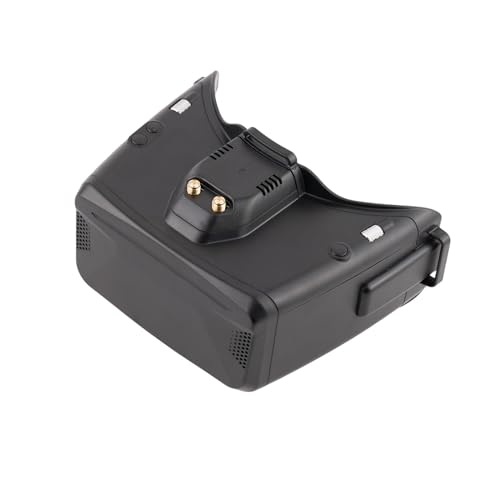
SKYZONE Cobra X V4 FPV goggles
5.8 GHz 48CH, SteadyView, DVR, head tracker
Analog FPV builder or racer who needs diversity reception where digital signal is not an option.
The analog goggle that analog holdouts still buy, because SteadyView diversity holds a picture together where digital simply cuts out.
Prices are approximate and change constantly. Links are affiliate links: we earn a commission if you buy, at no extra cost to you.
The DJI Goggles N3 is the beginner pick because it removes financial risk from the decision to try FPV. A single wide LCD panel instead of dual OLEDs means a less sharp, bulkier headset, but the picture is still genuinely usable digital FPV, and at around $229 the total loss if the hobby does not stick is manageable.
The DJI Goggles 3 is the best-value tier for anyone already committed to DJI's O4 ecosystem, at around $570. Dual Micro-OLED panels and real-view passthrough, which lets you see the actual field without removing the headset, are the two upgrades that most justify the jump from the N3, especially for pilots doing longer sessions where comfort and clarity both compound.
The SKYZONE Cobra X V4 FPV goggles is the expert tier, and it should not be the first pair anyone buys unless they already know they are building an analog racing rig. At around $460, SteadyView diversity reception and a built-in head tracker are genuinely valuable to a competitive racer chasing every last bit of range and reliability, but a beginner flying a DJI cinewhoop or a digital freestyle build gets nothing from analog diversity and should spend that money on the digital ecosystem instead.
FPV goggle comparison at a glance
| Goggles | System | Panel | Notable feature | Price |
|---|---|---|---|---|
| DJI Goggles N3 | Digital, DJI O4 | Single ultra-wide 1080p LCD | Lowest-cost entry to O4 | $229 |
| DJI Goggles 3 | Digital, DJI O4 | Dual Micro-OLED | Real-view passthrough, adjustable diopters | $570 |
| Fat Shark Recon HD FPV goggles | Digital, box style | Box-style dual panel | Digital HD at an analog price | $199 |
| SKYZONE Cobra X V4 FPV goggles | Analog, 5.8 GHz 48CH | Box-style with SteadyView diversity | Graceful signal degradation, built-in head tracker | $460 |
The price spread here is wider than in most gear categories on this site, and it maps directly to how committed a buyer already is. The Fat Shark Recon HD FPV goggles is worth calling out specifically: at $199 it delivers digital HD image quality in a box form factor at close to analog pricing, which makes it a genuine alternative to the DJI ecosystem for a builder who prefers a box-style headset.
How do you decide between the DJI ecosystem and an analog or box-style system?
The honest answer is that this decision is usually made for you by what aircraft you are flying. A RC 2 controller (RC331) for DJI Neo, Air 3 and Mini 4 Pro-controlled camera drone is not FPV at all, and an FPV cinewhoop like the DJI Avata 2 is built specifically around the O4 goggle ecosystem, so DJI Goggles N3 or DJI Goggles 3 are effectively the only options if that is the aircraft you own. A hand-built freestyle or racing quad, by contrast, can run either an analog video transmitter or a digital one depending on what stack you choose during the build, which is where SKYZONE Cobra X V4 FPV goggles and Fat Shark Recon HD FPV goggles genuinely compete for the same buyer.
If you are still choosing your first aircraft rather than matching goggles to one you already own, see our guide to the best FPV drones for beginners, which addresses exactly that starting question before goggles even enter the picture. Our analog versus digital FPV comparison goes deeper into the tradeoff summarized above if you are still undecided.
What is the realistic battery life and charging routine to plan around?
Headset-style digital goggles like the DJI Goggles 3 and DJI Goggles N3 use an internal battery that typically runs 90 minutes to two hours of active use per charge, which comfortably covers a normal evening session but not a full day at the field without a plan to top it up. Box-style units, including the Fat Shark Recon HD FPV goggles and SKYZONE Cobra X V4 FPV goggles, more commonly run on a removable battery pack rather than a sealed internal cell, which trades a bulkier headset for the ability to swap in a charged spare in seconds rather than waiting on a cable.
That difference matters more than it looks like on a spec sheet once you are actually at a field for several hours. A sealed internal battery means charging between sessions rather than during them, so a longer day of flying with headset-style goggles usually means bringing a portable USB-C power bank and topping up between flights rather than swapping hardware. A removable-battery box goggle avoids that entirely, at the cost of extra weight on the head from the battery pack itself, which is why some long-session pilots specifically choose a box style over a sleeker sealed headset.
Either way, treat goggle battery life the same way you treat aircraft battery life: plan for it rather than discovering it mid-session. A dead pair of goggles ends a flying session immediately and completely, in a way that is more disruptive than a depleted aircraft battery, since you cannot see anything at all without power to the headset. Charge goggles fully the night before a planned session rather than assuming a partial charge from last time will be enough.
How did we choose these goggles without flying with each pair ourselves?
We do not fly review units and never claim otherwise. Resolution, field of view and transmission standard figures on this page come from manufacturer published specifications. Real-world impressions of comfort, latency and how each system behaves at range come from verified owner reviews and pilot community reports read in volume, weighted toward reports that agree with each other rather than single outlier opinions. Where the manufacturer spec and community reports disagree meaningfully, we note it rather than picking a side.
Buying tips before you commit to a goggle ecosystem
Buy goggles to match the aircraft or build you already have, or plan to have, rather than buying goggles first and working backward. A digital O4 goggle is wasted on an analog video transmitter and vice versa; the two systems are not interchangeable without additional hardware. If you are building rather than buying a ready-to-fly aircraft, read our first FPV build walkthrough before choosing goggles, since the video system decision happens early in a build, not last.
Try on any headset-style goggles before a long session if possible; fit and weight distribution genuinely vary between the DJI-style headset shape and a traditional box-style unit, and comfort during a 20 or 30 minute session matters as much as image quality once the novelty wears off. Pair whichever goggles you choose with a matched radio; see our best FPV radios guide for the transmitter side of the same decision, since goggles and radio together are what actually define the flying experience.
Finally, budget for a spare battery or a backup power option for headset-style goggles that do not use swappable packs, since a dead goggle battery ends a flying session immediately in a way a dead aircraft battery does not, if you are mid-air and lose the video feed. Most digital goggles run 90 minutes to two hours per charge, which covers a normal session but not a full day at the field without a plan to recharge.
Questions people ask
+ What is the difference between analog and digital FPV goggles?
Analog goggles, like the SKYZONE Cobra X V4, receive a continuous radio signal that degrades gracefully as range increases, giving a warning before it cuts out completely. Digital goggles, like the DJI Goggles N3 and Goggles 3, compress and transmit a much sharper image but tend to fail more abruptly at their range limit. Racers still favor analog for that graceful degradation; most other pilots prefer digital for the clarity.
+ Do I need DJI Goggles 3 or is Goggles N3 enough for a first pair?
For a first pair, the DJI Goggles N3 is enough. It uses one wide LCD panel instead of the Goggles 3 dual Micro-OLED setup, so the image is less sharp and the unit is bulkier, but it costs less than half as much and still gives full O4-class digital FPV. Upgrade to Goggles 3 once you know you are staying in the hobby and want the sharper picture.
+ Can FPV goggles be used with glasses?
Most modern FPV goggles, including the DJI Goggles 3 and Goggles N3, include adjustable diopter dials that correct for common near-sightedness and far-sightedness without needing glasses underneath. The adjustable range is limited, typically a few diopters in each direction, so pilots with a strong prescription outside that range may still need to fly with glasses on or add clip-in prescription lenses.
+ Are box-style FPV goggles worse than the DJI style?
Not worse, different. Box-style goggles like the Fat Shark Recon HD use a fixed rigid shell and are typically cheaper and more common among builders who already own analog gear, while DJI-style goggles use a more compact headset shape with head tracking and better ergonomics for longer sessions. Image quality on a modern digital box goggle can match DJI closely; the real difference is form factor and ecosystem.
+ Do FPV goggles need their own registration or Remote ID compliance?
No. FPV goggles are a video receiver worn by the pilot, not part of the aircraft, so they carry no registration or Remote ID requirement of their own. Remote ID and registration requirements apply to the drone being flown, based on its weight and how it is being flown, not to the goggles used to see through its camera.
+ What is head tracking on FPV goggles and do I actually need it?
Head tracking lets small head movements pan a gimbal camera on the aircraft, which is a feature found on cinewhoop-style drones like the DJI Avata 2 rather than on freestyle or racing builds. If you fly a fixed-camera freestyle or race quad, head tracking does nothing for you. If you fly a gimbal cinewhoop, it is genuinely useful and worth checking for before buying a pair of goggles.