The FPV first quad build
The path that works: simulator, then a whoop indoors, then carbon outdoors. Ten items, one total.
Researched from published specifications and verified owner reviews · updated 2026
The short answer
A complete FPV starter path costs around $667: a simulator-capable ELRS radio at about $66 to learn on for free, a BETAFPV Cetus Pro whoop kit with goggles and radio included at about $211, and a Tinyhawk 3 carbon quad at about $320 for outdoors, plus charging, a fireproof bag and basic tools. Both aircraft stay under 250 g.
FPV is a different hobby from camera drone flying, and treating it as an upgrade path is the most expensive mistake beginners make. There is no position hold, no obstacle avoidance and no return to home worth relying on. In manual mode the aircraft does exactly what you tell it and nothing else, including falling out of the sky the moment you stop telling it things.
BETAFPV
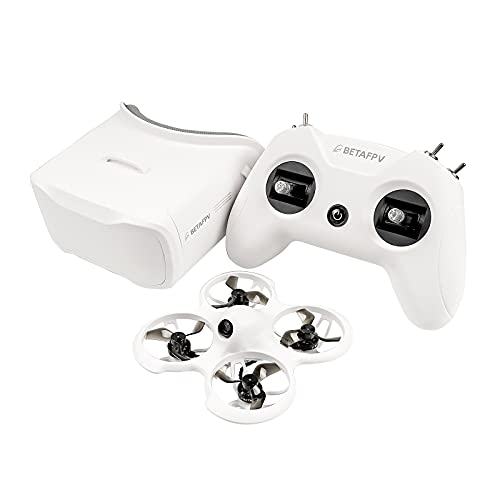
BETAFPV Cetus Pro FPV kit
Whoop, goggles and radio in one box
Goggles, radio and a ducted whoop in one box, with three flight modes so you can graduate from self-levelling to full manual indoors, where a crash costs nothing.
Prices move constantly. We earn a commission if you buy through these links, at no extra cost to you.
Which is why this build is a sequence, not a shopping list. The BETAFPV LiteRadio 4 (ELRS) ($66) comes first and plugs into a computer. The BETAFPV Cetus Pro FPV kit ($211) comes second and stays indoors. The Tinyhawk 3 Plus RTF kit ($300) comes third and goes outside. Buying all three at once is fine. Flying them out of order is not.
FPV ladder, tier 1 of 2
The FPV first quad build
Buy this first and fly it for a month
subtotal $66The single highest-value purchase in FPV is a radio that plugs into a computer, because twenty hours in a simulator costs nothing and saves a quad.
| Item | Why it is on this list | Qty | Price | Buy |
|---|---|---|---|---|
| BETAFPV LiteRadio 4 (ELRS) BETAFPV | Plugs into a computer as a game controller for the simulators everyone learns on, and it also flies real quads over ExpressLRS later. Buy it before you buy anything that can crash. compare options | 1 | $66 | Price |
The indoor trainer
subtotal $243A tiny ducted quad you can fly in a living room, with three flight modes so you can graduate from self-levelling to full manual without leaving the house.
| Item | Why it is on this list | Qty | Price | Buy |
|---|---|---|---|---|
| BETAFPV Cetus Pro FPV kit BETAFPV | Goggles, radio and quad in one box, with angle, horizon and manual modes. The ducts mean it bounces off furniture instead of destroying it, and the whole kit costs less than the goggles you will eventually want. compare options | 1 | $211 | Price |
| SSUPCHG 2S/3S balance charger SSUPCHG | A cheap dedicated charger for the 1S and 2S whoop packs, so the main charger stays free later. Whoop packs are small enough that people get careless with them, which is exactly when a fire happens. compare options | 1 | $17 | Price |
| Zeee fireproof LiPo charging bags (2 pack) Zeee | Charge and store every lithium pack inside one of these, always, including the tiny ones. A fifteen dollar bag against a lithium fire is the least controversial purchase in the hobby. | 1 | $15 | Price |
The outdoor step up
subtotal $315When you can fly the whoop in manual mode without thinking about it, this is the aircraft that survives being flown outdoors properly.
| Item | Why it is on this list | Qty | Price | Buy |
|---|---|---|---|---|
| Tinyhawk 3 Plus RTF kit Tinyhawk | A carbon-framed quad with goggles and a radio included, which flies outdoors in real wind where a whoop is a leaf. Still under 250 g, so recreational flying needs no aircraft registration, and cheap enough that a tree is a lesson rather than a disaster. compare options | 1 | $300 | Price |
| 30 inch waterproof folding landing pad YINGJEE | Keeps dirt out of the motors and gives you a defined takeoff spot, which matters more in FPV than on a camera drone because you cannot see your feet. | 1 | $15 | Price |
The tools you will need within a month
subtotal $43FPV is a repair hobby. These four items are what turn a broken quad into a twenty minute fix instead of a shelf ornament.
| Item | Why it is on this list | Qty | Price | Buy |
|---|---|---|---|---|
| Titanium hex driver set (1.5 to 3.0 mm) RCpow | The four driver sizes that hold a quadcopter together. Cheap drivers round out M2 screw heads, and a rounded motor screw means drilling a motor out of an arm. compare options | 1 | $12 | Price |
| Non-slip LiPo battery straps, 20 x 250 mm (8 pack) FPVDrone | Straps stretch, and then a pack leaves the frame mid-flip. Treat them as consumables and replace any that no longer snap back. | 1 | $13 | Price |
| 1-8S LiPo cell checker with low-voltage alarm yueton | Six dollars to read every cell individually. A pack reading 3.71, 3.72, 3.70 and 3.55 is telling you it is finished, and nothing else in your kit will tell you that. | 1 | $6 | Price |
| VIFLY anti-collision strobe light VIFLY | Small and bright enough to be worth the grams on a light quad. It makes the aircraft findable in long grass and easier to keep in sight, which is a rule requirement rather than a preference. | 1 | $12 | Price |
Complete build, everything above
10 items across 4 groups. Prices are approximate and move constantly.
$667
Every line is an affiliate link. We earn a commission if you buy, at no extra cost to you, and it does not change what goes on this list.
Why the radio is the first purchase
Every FPV simulator worth using accepts a real transmitter over USB, and the muscle memory built in a simulator transfers almost perfectly to a real quad. The reverse is not true: nothing about flying a camera drone prepares you for manual mode, because a camera drone is holding itself level while you suggest directions.
Twenty hours in a simulator is the difference between a first outdoor session that produces a flight and one that produces a search. The BETAFPV LiteRadio 4 (ELRS) ($66) is cheap, has hall-effect gimbals rather than the potentiometer gimbals in a cheaper controller, and runs ExpressLRS so it binds to real quads later. Buying a simulator-only gamepad is a false economy, because the stick feel is the thing you are training.
When you outgrow it, the upgrade is a full-size radio such as the RadioMaster Pocket (ELRS) ($79) or the RadioMaster Boxer (ELRS, hall gimbals) ($190), both compared in best FPV radios.
Why a whoop, and why indoors
A tiny ducted quad weighing well under 100 g cannot damage a wall, cannot hurt a person in any realistic way, and bounces off furniture. That is the entire argument. It means you can practise manual mode in a living room in bad weather, at night, for months, and the only cost of a mistake is picking it up.
The specific reason the BETAFPV Cetus Pro FPV kit is the standard recommendation is its three flight modes. Angle mode self-levels, which lets you fly on day one. Horizon mode allows flips while still returning to level. Manual mode does nothing for you at all, which is where the hobby actually lives. Being able to move between them on the same aircraft, in the same room, is worth more than any spec on the box.
Set the packs down honestly: whoop flights are two to four minutes and you will want six packs. They are cheap. Charge them in a Zeee fireproof LiPo charging bags (2 pack) ($15), on a hard surface, never unattended, and never overnight. Whoop packs are small enough that people get casual with them, and a small lithium fire is still a lithium fire. The full routine is in LiPo battery care and storage.
The outdoor step
A whoop outdoors is a leaf. Any real breeze takes it away, and that is not a skill problem. The Tinyhawk 3 Plus RTF kit ($300) is the standard next step because it has a carbon frame, enough power to hold position in wind, an ELRS link with real range, and it stays under 250 g so recreational flying still needs no aircraft registration.
What outdoor flying adds is everything the rules care about. You need somewhere legal to fly, which means checking airspace before you go. Flying in goggles means you cannot maintain visual line of sight yourself, so you need a visual observer standing next to you whose job is to watch the aircraft and the sky. And the Remote ID question now applies in a way it does not indoors. All three are covered in the FAA rules page, and the airspace tool at LAANC explained.
What to skip
- Expensive goggles, for now. Both kits on this list include goggles. Buying DJI Goggles 3 ($570) before you know whether you enjoy FPV is spending more on the display than on everything else combined. The goggle upgrade belongs at the start of tier two.
- A 5 inch quad. Not yet, and this is the important one. A 5 inch freestyle quad carries carbon propellers turning at 25,000 rpm and is genuinely dangerous to people. It is tier two for safety reasons as much as skill reasons.
- A soldering iron. Nothing on this list requires soldering. It becomes essential in tier two, and buying it early just means it sits in a drawer.
- A GPS module. Both aircraft here are flown within sight of where you are standing. GPS is a rescue tool for aircraft that go further than that.
What to upgrade first
More packs. Always more packs. FPV flights are three to five minutes, so a session is measured in how many packs you brought. This is even more true here than on camera drones.
Goggles. The goggles included in a starter kit are the weakest part of it, and a better display genuinely improves your flying because you can see obstacles sooner. A DJI Goggles N3 or a Fat Shark Recon HD FPV goggles ($199) is the usual next step, compared in best FPV goggles.
A full-size radio. The LiteRadio is a superb starter and a compromise. Hall gimbals in a full-size shell such as the RadioMaster Boxer (ELRS, hall gimbals) ($190) is the radio most people then keep across four or five aircraft.
Then tier two. The 5 inch freestyle build is where the hobby opens up, and it assumes you can already fly manual mode reliably. If you would rather have FPV footage than FPV flying skills, the honest alternative is the DJI Avata 2 Fly More Combo ($1,019), which flies in goggles and recovers like a camera drone. That trade is argued out at Avata 2 versus a custom FPV build.
The rules that apply specifically to flying in goggles
Flying first-person view does not exempt you from the visual line of sight requirement, it changes who satisfies it. A visual observer must be co-located with you, must maintain unaided visual contact with the aircraft, and must be able to communicate with you continuously. That is not a formality, it is the mechanism by which an FPV flight stays legal.
Beyond that the requirements are the ordinary ones and they all still apply: a TRUST certificate for recreational flying, a Part 107 certificate for anything in furtherance of a business, Remote ID compliance, airspace authorization where required, and registration at or above 250 g. Nothing about FPV makes any of them optional.
Questions people ask
+ Do I really need a simulator first?
Yes, and it is the closest thing to free advice in this hobby. FPV in manual mode is genuinely difficult in a way that camera drones are not, because nothing self-levels and every input is yours. Twenty hours in a simulator with a real radio builds the reflexes that otherwise get built by destroying hardware. The radio on this list plugs into a computer for exactly that purpose.
+ Is a tiny whoop a waste of money if I want to fly 5 inch quads?
No, because the skill transfers completely and the consequences do not. Manual mode on a 30 g ducted whoop is the same stick discipline as manual mode on a 700 g 5 inch quad, and one of those can hurt somebody. Almost everyone who skips the whoop and starts on a 5 inch either quits or crashes expensively, often both.
+ Do FPV drones need FAA registration?
The 250 g threshold applies exactly the same way. Both aircraft on this list stay under it, so recreational flying needs no aircraft registration. Everything else still applies: TRUST, visual line of sight, no interference with manned aircraft, and airspace authorization in controlled airspace. Flying FPV in goggles requires a visual observer to maintain visual line of sight on your behalf.
+ What about Remote ID for FPV?
Remote ID rules apply to the aircraft based on how it is built and where it is flown. There are three lawful paths: standard Remote ID built in by the manufacturer, an FAA-declared broadcast module fitted to an aircraft that lacks it, or flying exclusively inside an FAA-Recognized Identification Area. Confirm which applies to your specific aircraft before you fly it outdoors.
+ How long until I can fly freestyle?
Most people are flying controlled manual-mode laps outdoors after roughly 20 to 30 hours of simulator time plus 20 to 30 packs on a real quad. Basic freestyle moves come somewhere after that. The variable is not talent, it is whether you practise deliberately or just fly around, and the simulator is where deliberate practice is cheap.
+ Should I buy a ready-to-fly kit or build my own?
Ready-to-fly first, without question. A kit removes every variable except your flying, which is the only thing you should be learning at this stage. Building teaches you a great deal and it teaches it far more efficiently once you already know how a quad should behave, so the build comes second rather than first.